 Menu
Menu
Menu
Menu
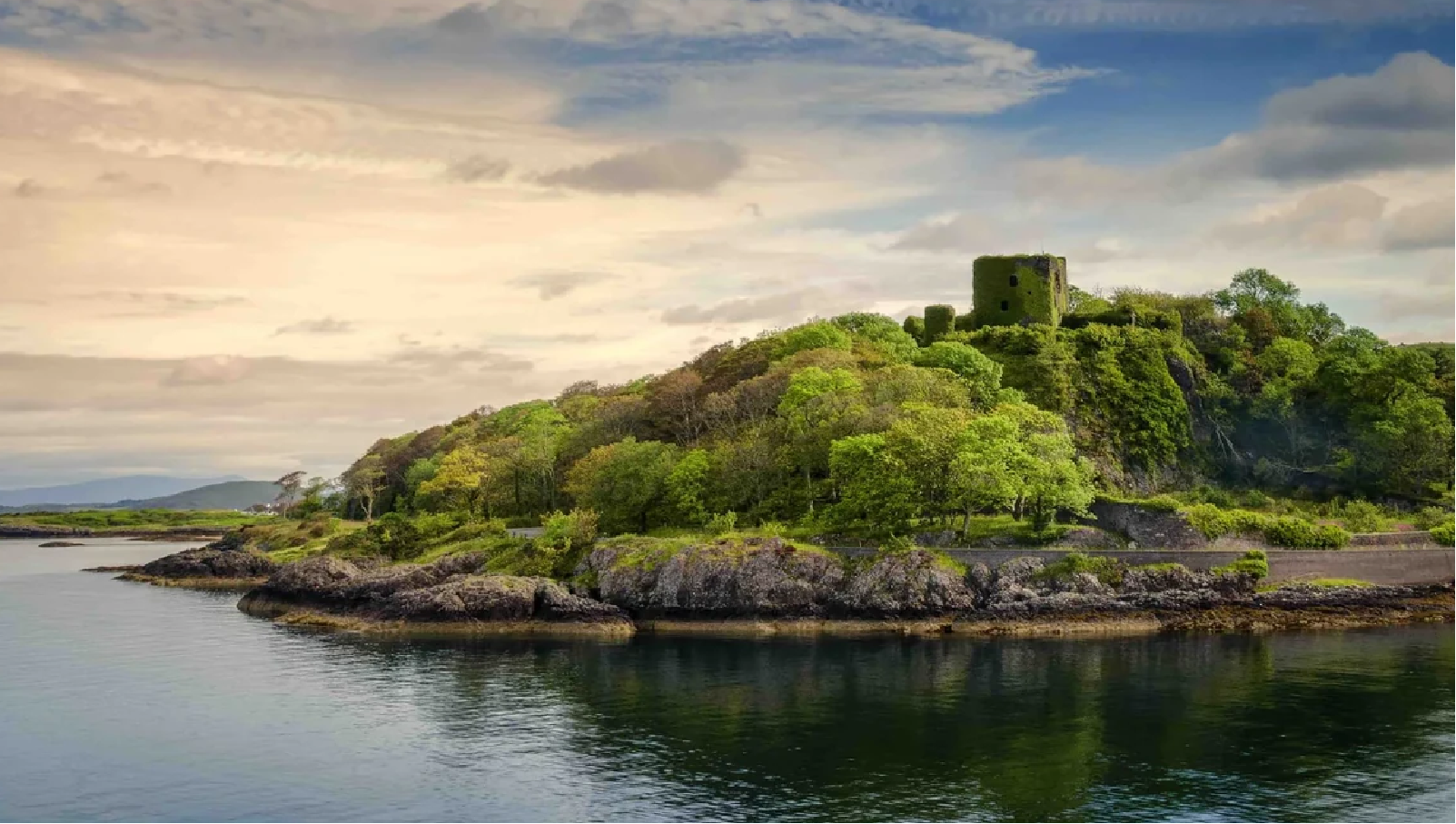
Dunollie Castle · Oban, Scotland · Kingdom of the Isles
The lineage
Lords of Lorne takes its name from a title held for centuries by Clan MacDougall — direct descendants of Somerled, the Norse-Gaelic chieftain who consolidated power over the Kingdom of the Isles in the twelfth century — reclaiming Argyll, Kintyre, and the Hebrides from Norse overlordship between 1156 and his death in 1164. That lineage is not metaphor. It is documented ancestry, traced through birth records to Georg Mackdougall, born December 14, 1684, in Gordon, Berwickshire, Scotland.
The brand name is a reclamation. The title Lord of Lorne passed from the MacDougalls to the Stewarts around 1375. It has not been held by the clan since. Lords of Lorne — the furniture atelier — is its return. Not of land or title, but of what those things stood for: stewardship, craft, and things built to outlast the people who built them.
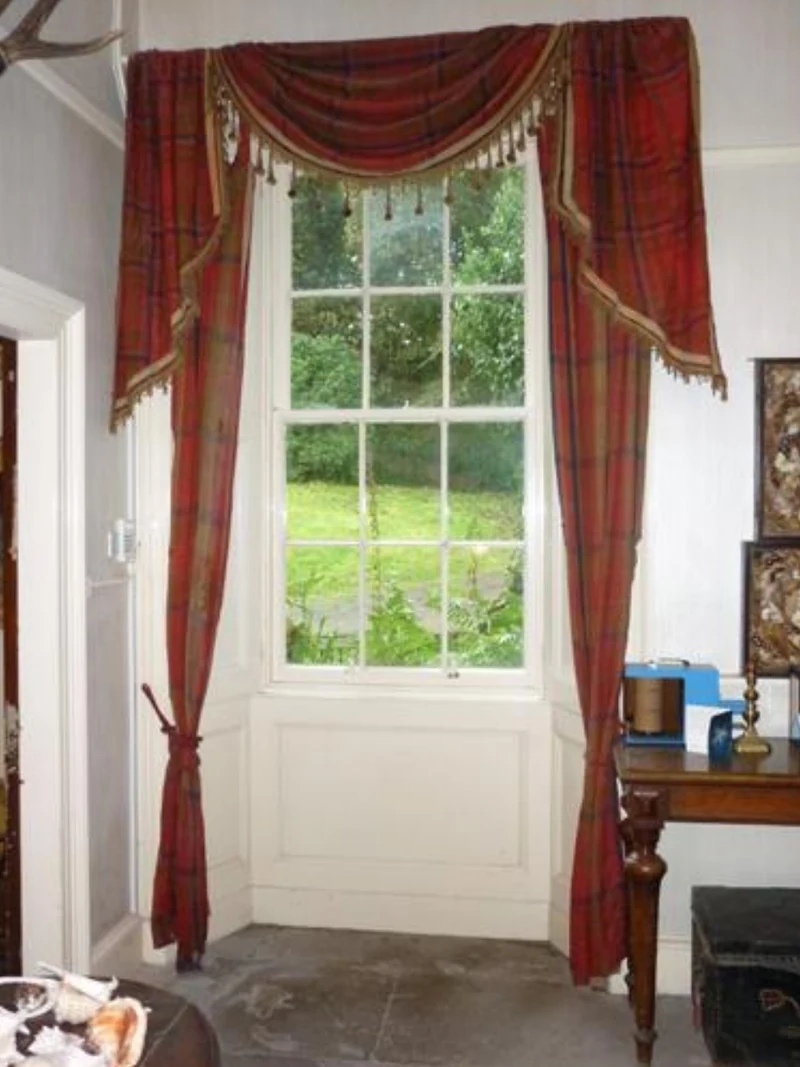
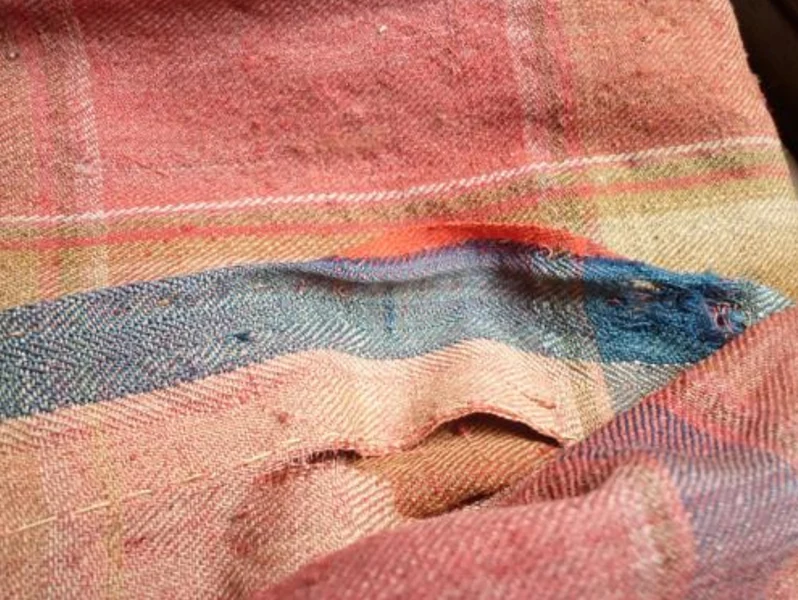
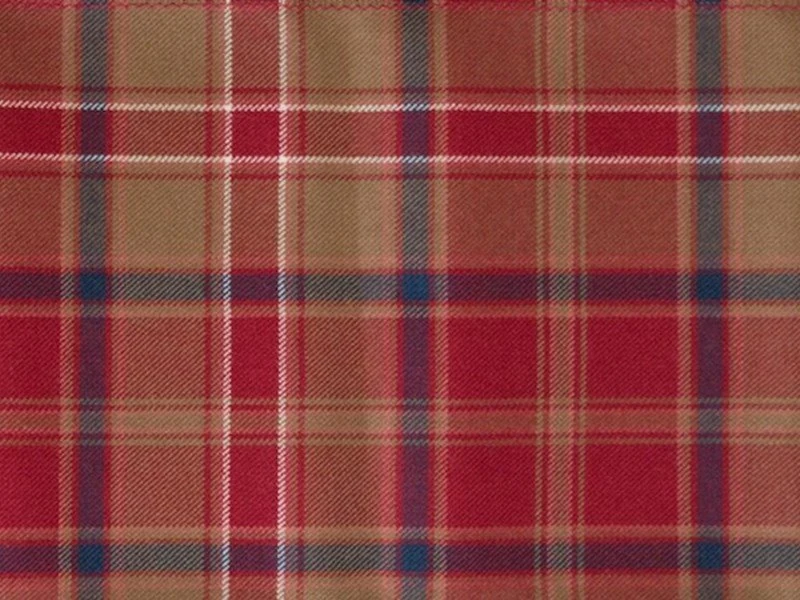
In 2010, a tartan of extraordinary significance was discovered at Dunollie House — a plaid woven circa 1730, predating the clan tartan tradition entirely. Peter MacDonald, one of Scotland's foremost tartan historians, described it as the largest known example of early hard tartan and the only known early 18th century full plaid to survive. In over 30 years of research, he had never seen anything of its quality.
Known as a "madder reid plaid," it had been recycled into curtains around 1800 during the Highland Revival. When reused, the outer edge was turned and bound — which inadvertently preserved the original crimson and blue beneath the fold for nearly two centuries, while the exposed face faded in the Dunollie light. The plaid may conceivably be the one listed in the valuation of the MacDougall Chief's effects on his death in 1737.
It was given the name Dalriada — after the ancient Norse-Gaelic kingdom — to honour the region and heritage it embodies. It has no strict clan affiliation. It belongs to the land. This is the tartan hand-sewn by Marcus into the provenance pocket of every Lords of Lorne Subject.
The full history at Dunollie →Somerled — King of the Isles
Somerled was born circa 1113, of mixed Norse and Gaelic descent, in an era when the western seaboard of Scotland was contested territory — nominally Norwegian, culturally Gaelic, and controlled by whoever commanded the sea. He was a warrior king of exceptional ability, systematically reclaiming the Hebrides from Viking overlords through a combination of naval dominance and political cunning.
By 1156, Somerled had driven the Norse from the inner Hebrides and established himself as King of the Isles — Rí Innse Gall. The historic kingdom of Dál Riata had been first unified by Kenneth MacAlpin in 843 AD; what Somerled achieved was its reclamation — reconsolidating Norse-Gaelic identity and power over a seaboard that had drifted under Norse dominion for generations. His realm stretched from the Firth of Clyde to the northern islands. He commanded a fleet of longships built to a design he is credited with modifying, adding a rudder that gave his vessels a maneuverability advantage over the Norse galleys he faced.
He died in 1164 at the Battle of Renfrew, leading a force against King Malcolm IV of Scotland. The circumstances of his death remain disputed — battlefield accounts suggest he was killed by treachery rather than in direct combat. He was approximately fifty years old. His kingdom was divided among his sons.
Clan MacDougall — Lords of Lorne
Dougall, Somerled's eldest son, received Lorne, Benderloch, and the islands of Mull, Lismore, and Scarba. He founded Clan MacDougall — the name meaning simply "son of Dougall" — and established his power base at Dunollie, the rocky promontory above what is now Oban on the west coast of Scotland.
The MacDougalls at their height were among the most powerful magnates in Scotland. They held Dunollie Castle, Dunstaffnage Castle, and Gylen Castle on the island of Kerrera — a network of strongholds commanding the sea approaches to Argyll. They were styled Lords of Lorne, Lords of Argyll, and Lords of the Isles interchangeably, a reflection of the territorial reach that Somerled's original conquests had secured.
Their alliance network was formidable. The MacDougalls intermarried with the Comyns, the most powerful family in Scotland outside the crown, and through that connection became entangled in the Wars of Scottish Independence — a conflict that would ultimately break their power.
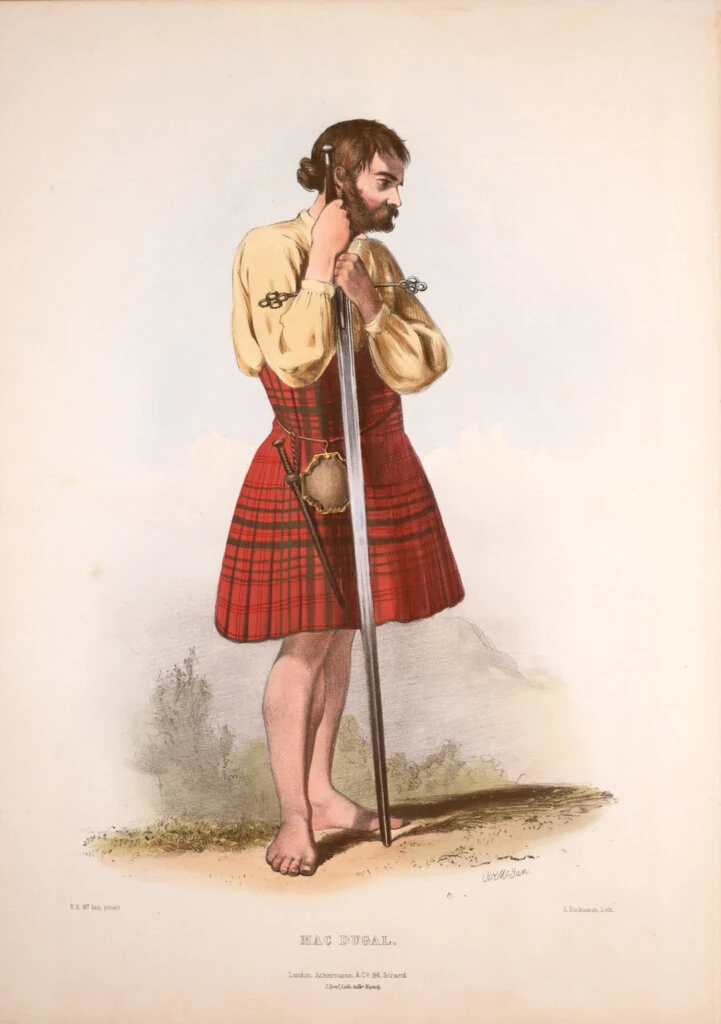
The Castles
The arms & motto
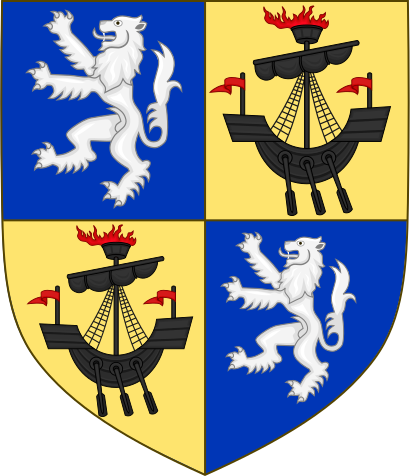
The shield is quartered — two legacies rendered in four fields. 1st and 4th: azure, a lion rampant argent. A silver lion on blue, descending from the Kings of Dál Riata — the ancient Celtic-Scottish monarchy that Somerled himself reclaimed from Norse overlordship. Royal lineage, stated without apology. 2nd and 3rd: or, a lymphad sable, beacon blazing at the topmast. A black galley on gold — the Lordship of Lorne made heraldic. The galley is Somerled's instrument: naval mastery, command of the Western Isles, dominion over waters that punished the unprepared. The beacon at the topmast is a summoning. When it burned, clansmen armed and assembled.
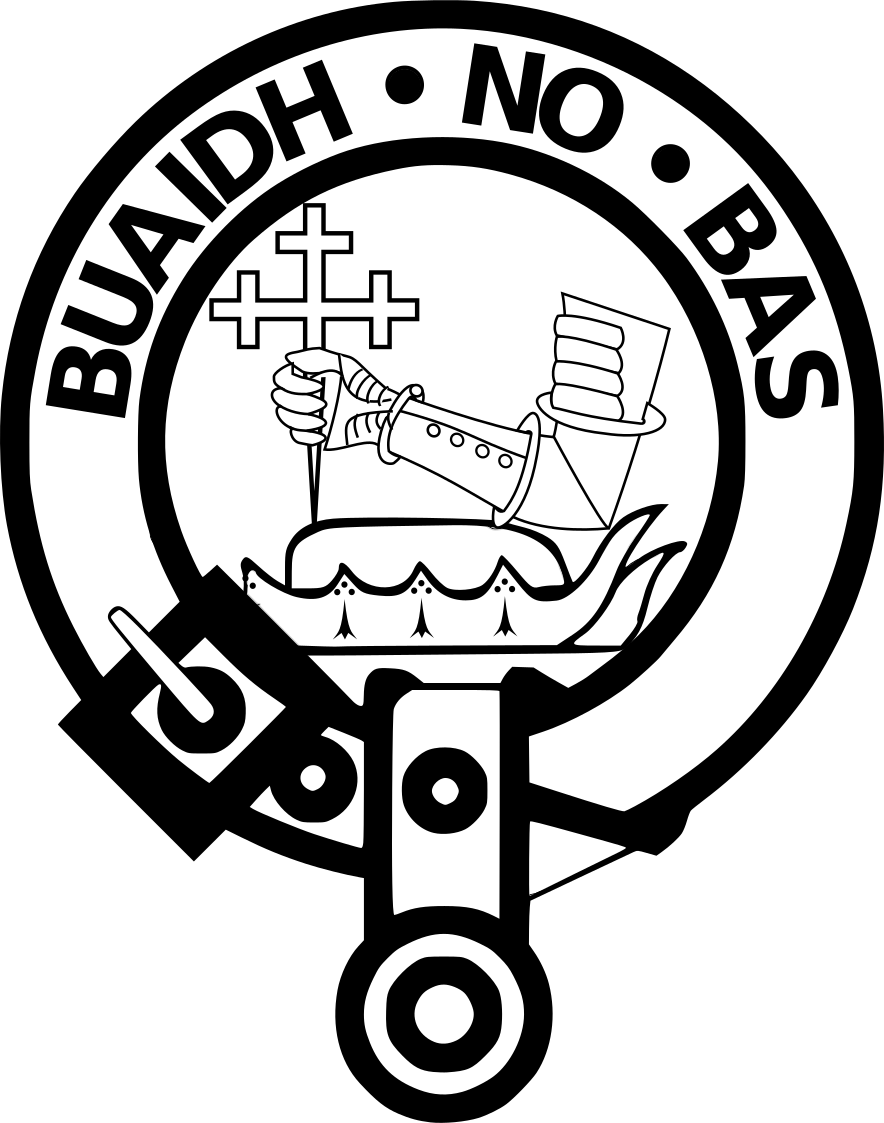
Not a metaphor. A declaration made by men who would rather die in the field than return in dishonour. The crest makes the same argument in heraldry: a dexter arm in armour, holding a cross crosslet fitchée erect. Two symbols fused into one. The armoured arm is the clan's historical identity — warrior lords of the Western Highlands, holders of Dunollie, commanders of the sea approach to Argyll. The cross is older still. Fitchée — pointed at the base — so it could be driven into the ground. Crusaders carried this cross on pilgrimage and pressed it into the earth at dawn to pray before battle. It is also the cross of St. Moluag, patron saint of Somerled himself. Faith and force, held in the same fist. The motto took its full weight in 1306, when Robert the Bruce killed a cousin of the MacDougall chief. The feud that followed was not political — it was personal. Buaidh no Bàs was the answer. Bruce won a battle. The Clan motto stayed true anyway.
The Brooch of Lorne
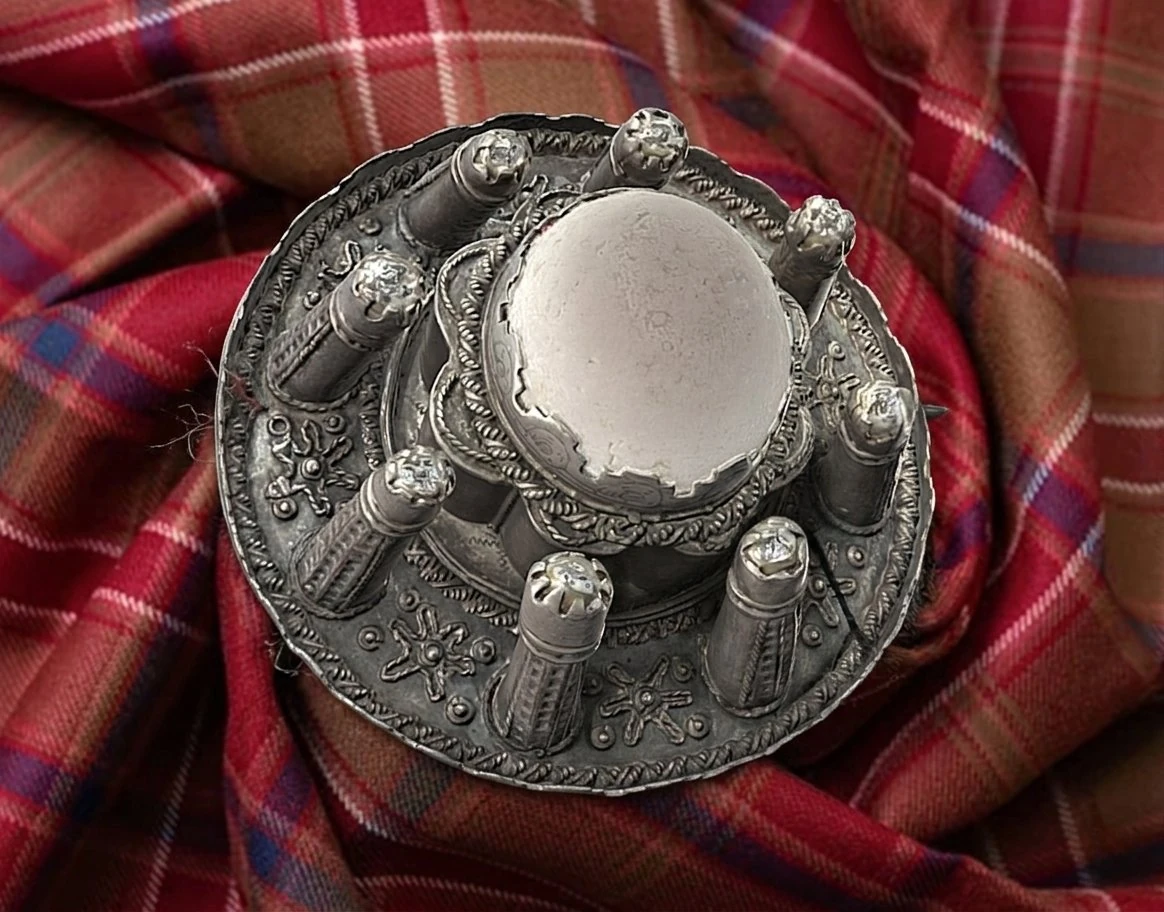
The Brooch of Lorne is a 13th century silver-and-crystal penannular brooch of Norse-Celtic design — one of the most significant clan artifacts in Scotland. MacDougall tradition holds that the brooch was of MacDougall origin, lost in the political turbulence of the early Wars of Independence, and restored to the clan at the Battle of Dalrigh in 1306.
At Dalrigh — a mountain pass in Strathfillan — the MacDougalls intercepted Robert the Bruce and a small force retreating after a defeat at Methven. The MacDougalls fell on Bruce's column and in the close fighting, the brooch-clasp was seized from Bruce's cloak as he broke free. Clan tradition holds the brooch was recognized as MacDougall property, reclaimed as much as captured.
Bruce never forgot Dalrigh. Two years later, in 1308, he returned to Argyll with a full army and defeated the MacDougalls at the Pass of Brander — a narrow defile between Loch Awe and the slopes of Ben Cruachan. John of Lorne, the MacDougall chief, watched from a boat on the loch as his clan was broken. Bruce seized Dunstaffnage. The MacDougalls' power was finished.
The brooch survived. It passed through generations of MacDougalls, through the loss of the Lorne title, through the burning of Gylen, through centuries of diminished clan influence. It is held today at Dunollie House in Oban, in the keeping of Robin MacDougall of MacDougall and Dunollie, 32nd Chief of Clan MacDougall, who succeeded to the title following the passing of his mother, the late Chief Madam Morag Morley MacDougall. It has never left MacDougall hands.
That continuity is the point. Not power. Not territory. The object. The thing you hold when everything else is gone — and then go about the business of getting everything else back.
The MacDougall timeline
Born of Norse-Gaelic descent on the western seaboard of Scotland. The historic kingdom of Dál Riata had been unified by Kenneth MacAlpin in 843 AD — Somerled's achievement was its reclamation from Norse overlordship three centuries later.
Somerled drives the Norse from the inner Hebrides and unites Argyll, Kintyre, and the Hebrides into a semi-independent realm. Styled Rí Innse Gall — King of the Isles. His modified longship rudder design gives his fleet decisive maneuverability over Norse galleys.
Somerled is killed at the Battle of Renfrew. His kingdom is divided. Dougall, his eldest son, receives Lorne, Mull, and Argyll — founding Clan MacDougall.
The clan holds Dunollie, Dunstaffnage, and Gylen. Lords of Lorne, Argyll, and the Isles. Alliance with the Comyns makes them kingmakers in Scottish politics.
Battle of Dalrigh. The MacDougalls intercept Robert the Bruce's retreating force. The Brooch of Lorne is restored to clan hands. It has not left them since.
Robert the Bruce defeats the MacDougalls at the Pass of Brander. Dunstaffnage falls. John of Lorne — John Bacach — refuses to surrender, enters English service, and is appointed Admiral of the Western Seas by King Edward II. For a decade he harasses Bruce's coastal garrisons from the sea. The clan's territorial dominance is broken. Their character is not.
Euan MacDougall marries a granddaughter of Robert the Bruce. The marriage reconciles the clan with the Scottish Crown. King David II issues a royal charter re-granting most of the MacDougall mainland estates. Dunollie is restored. The clan that Bruce broke is welcomed back by Bruce's own blood.
The Lordship of Lorne passes to the Stewarts through marriage. The MacDougalls retain Dunollie and their clan identity but lose their great territorial title.
Alexander MacDougall leads 500 clansmen into battle for Charles I during the English Civil War. The MacDougalls become known for their steadfast loyalty to the Stuart dynasty — often at great personal cost.
General Monck's forces burn Gylen Castle during the Wars of the Three Kingdoms. Its ruins remain on the island of Kerrera — a testament to what the clan endured and held through.
Iain Ciar, 22nd Chief, fights at the Battle of Sheriffmuir for the Stuart cause. The clan's estates are forfeited. In the following generation, they are restored again. The MacDougalls have now lost and recovered their lands twice.
The 25th Chief achieves the rank of Vice Admiral in the Royal Navy — a return to the clan's ancient roots as master mariners of the western seas, now commanding under the British Crown.
December 14, 1684. Gordon, Berwickshire, Scotland. The earliest documented ancestor of Marcus Nelson, founder of Lords of Lorne.
The MacDougall clan seat. Seat of the MacDougall clan and home of the MacDougall of Dunollie Preservation Trust. The Brooch of Lorne is on loan to National Museums Scotland in Edinburgh, on display in the Kingdom of the Scots gallery. The Dalriada tartan used in every Lords of Lorne provenance pocket is sourced here.
The Keep, Ketchum, Idaho. Founded by Marcus Nelson, documented MacDougall descendant. The title reclaimed — not as land or power, but as an ethos: things worth keeping, kept.
The Keep operates from the basement of Graham Galleries — 660 Sun Valley Rd E, Ketchum — owned by Cliff Graham, Marcus's oldest friend and the man who first brought him to Ketchum in 1995. Cliff taught Marcus to snowboard by taking him to the top of Bald Mountain and leaving him there. Marcus made it down. He has never forgiven Cliff. He works in his basement anyway.
We've established one exclusive level up for Subject provenance. Not every piece earns it.
When you see HoS:E in the serial number instead of LOL, you know this designation is reserved for pristinely curated sets and exceptional individual Subjects from the House of Somerled tier — pieces that represent the full range of what mid-century modern design achieved at its highest. Adrian Pearsall. Vladimir Kagan. Edward Wormley. Philip and Kelvin LaVerne. Designers who solved problems beautifully and left the evidence.
A HoS:E Subject carries an elevated collector card, three years of The Lorne Attendance bundled, and a direct link to the lineage that names the tier. It is the highest designation Lords of Lorne issues. It is not available on request. It is earned by the piece — accompanied with an embossed, House of Somerled black metal membership card.
The Provenance System →The clan seat
The Dalriada tartan in every Lords of Lorne provenance pocket is sourced from Dunollie House, Oban — the MacDougall clan seat. The Brooch of Lorne is on loan to the National Museum of Scotland in Edinburgh.
Frequently asked questions
Name the piece. The $2,500 retainer underwrites the search — credited to your balance at delivery. At The Find, Marcus sends photos and a retail price. 50% due to proceed. Balance on delivery, less the retainer. First-year Attendance included. Deposit terms apply ↗